

TL;DR: Rebuilding competence, relatedness, and autonomy through specific interventions when your internal drive crashes.
If you are starting here, Part 1: Why your brain is trying to make you quit explains the neuroscience of hedonic adaptation and the three pillars of motivation: autonomy, competence, and relatedness. Understanding what is broken comes before fixing it.

You know why your brain wants you to quit. Now comes the harder question: how do practitioners outlast the plateau when their neural reward system has gone dark?
When the “honeymoon phase” of rapid progress ends, every aikidoka hits a fork in the road. This is the inflection point where the practice either becomes a burden to be endured or a craft to be matured. Most people handle this moment in one of three ways:
The Clingers: They double down on discipline, trying to use willpower to force a dopamine return that isn’t coming.
The Leavers: They accept the “wasted effort” signal from their brain and move on to a new hobby.
The Reorienters: They recognize the structural failure of their motivation and intentionally rebuild their pillars.
The strategies that work for the Reorienters aren’t about “trying harder.” They are about shifting the mechanics of the practice.
Rebuilding Competence: Breaking the Mastery Illusion
The 4th kyu practitioner wrote: “I want to be good overnight but I know it will not happen.” This tension is a competence killer. When the gap between your aspiration and your current ability feels insurmountable, your brain stops trying.
The intervention here is process goal setting. Instead of “earn my next rank” (an outcome often controlled by politics or schedules), the goal becomes: “Today, I will notice the exact moment my weight transfers in tenkan.” By shrinking the scale of “success,” you provide your brain with achievable wins. You aren’t “getting better at aikido” in a vague sense; you are solving a specific physical puzzle. This restores the sense of competence that hedonic adaptation stole.
Another strategy used by survivors: Teaching beginners. As one practitioner noted, “When I train with newer students, I remember the problems I used to have... and I realize I actually did get better.” Seeing your own progress reflected in someone else’s struggle is a powerful antidote to the feeling of stagnation.
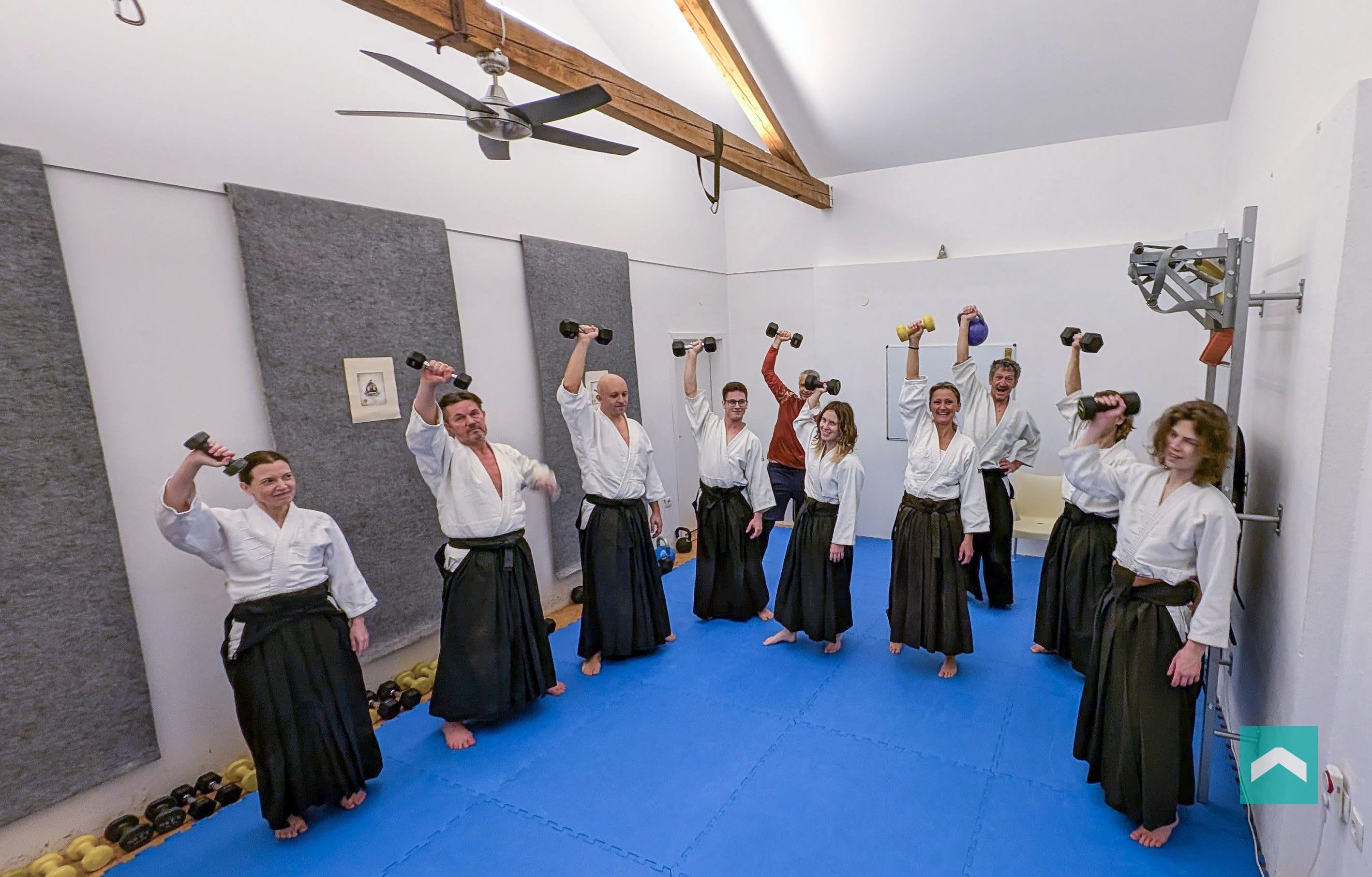
Rebuilding Relatedness: Distributed Social Glue
If your motivation is tied entirely to one person—your sensei or a single training partner—you are fragile. When that relationship fractures, the practice collapses.
Survivors distribute their Relatedness. They build a “social glue” that extends beyond the master-student hierarchy. This looks like:
Accountability structures: “I go because I know my partner needs a reliable uke tonight.”
Broadening the community: Attending seminars to realize that everyone, everywhere, thinks they are the only one who doesn’t understand ikkyo.
Data shows that social connection is the strongest predictor of long-term adherence. You can lose the feeling of mastery, but if you feel you belong to a tribe of people who “fail together” in a safe environment, you will keep showing up.
Reclaiming Autonomy: Authoring the Path
The most dangerous part of traditional training is the demand for exact replication. If you feel like a “technique-copying machine,” your Autonomy dies. You feel like you are being dragged through someone else’s journey.
The Reorienter finds ways to author their own path within the form. This doesn’t mean rebelling against the sensei; it means setting internal research projects.
“This month, I am exploring how to keep my shoulders relaxed, regardless of what technique is being called.”
“I am choosing to attend this specific seminar because I am curious about this lineage.”
When you move from extrinsic motivation (doing it for rank or to avoid disappointing the dojo) to intrinsic motivation (doing it for the love of the inquiry), your endurance doubles.
The Fragile Equilibrium
These strategies—micro-goals, distributed social connection, and self-directed inquiry—work. They allow practitioners to outlast the neurochemical crash of the plateau.
However, there is a catch: these interventions require a supportive ecosystem.
A practitioner can try to set micro-goals, but what if the sensei punishes any deviation from a rigid, repetitive drill? A student can try to build social glue, but what if the dojo culture is intentionally cold and competitive? A seeker can try to reclaim autonomy, but what if the organization demands absolute loyalty over personal exploration?
This is where Part 2 ends: with the uncomfortable realization that you can only “reorient” your psychology so far. If you are applying these strategies and the “spark” still isn’t returning, the problem might not be your brain. It might be that you are trying to maintain a healthy structure in an environment that is actively tearing its pillars down.
Next in Part 3: We will look at what happens when the dojo itself becomes the obstacle, and how the “Reorienters” find a way to train when the traditional system fails them. Read Part 3: The Institutional Shadow.
Which of the three responses are you currently in? Are you clinging, considering leaving, or trying to reorient? Share your current state and let’s look at the architecture of your dojo.