

In Part 3, we reframed teaching as transmission - not of techniques, but of presence. Now in the final part, we ask: if most people won’t do Aikido, can we still bring it to them? This is the story of how the art survives through translation, influence, and the everyday acts of those who carry it into the world.
Aikido’s niche isn’t combat or fitness – it’s connection
The common perception of martial arts, especially to outsiders - is that they’re about fighting, or at least physical conditioning. Aikido doesn’t fit neatly into that narrative. It was never really about winning. And in a world that increasingly avoids confrontation, it risks becoming irrelevant by clinging to old frames.
But what if Aikido’s true strength lies not in combat or fitness, but in its capacity to foster connection? Between body and mind. Between people. Between our inner state and the state of the room. Aikido, when practiced with sensitivity, is a practice of meeting—not defeating.
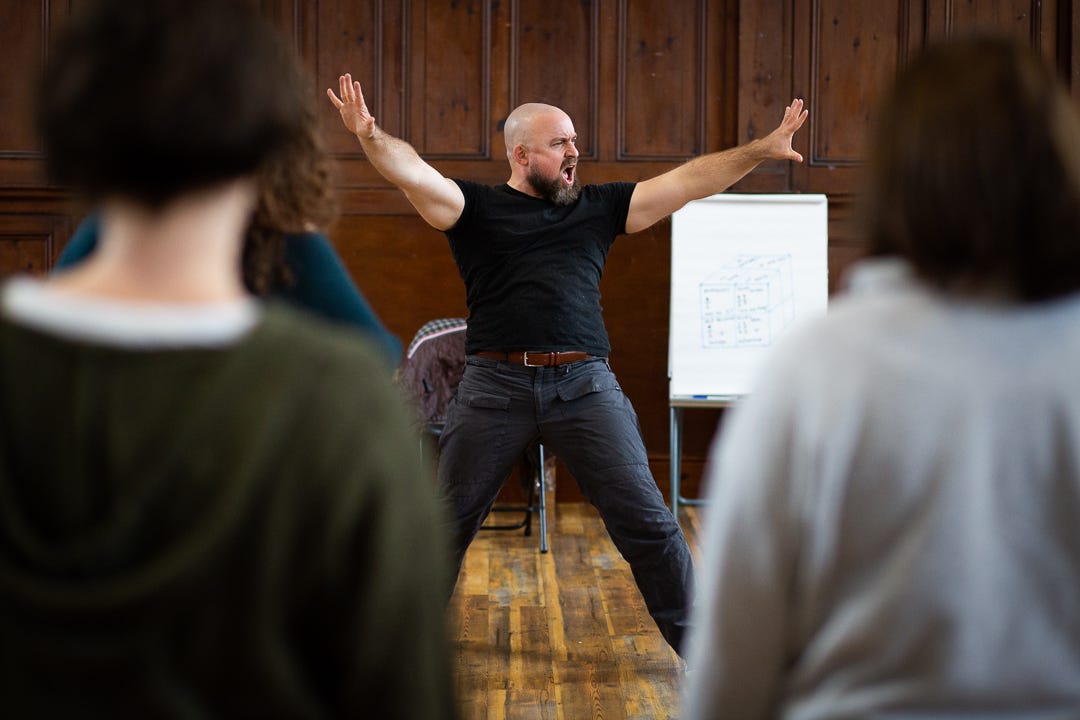
As Mark Walsh puts it, "I haven’t been attacked many times in my life, but I’ve been in plenty of arguments and awkward moments. That’s where the real dojo is now."
Role-taking, empathy, and awareness: what makes it unique
What distinguishes Aikido isn’t just its lack of competition or its elegant movements. It’s the built-in commitment to relational awareness. The ability to sense another’s center. To adjust before acting. To read intention in motion.
This role-taking—switching between attacker and receiver—builds empathy. It trains us to listen with the body, not just the ears. It fine-tunes our ability to regulate timing, tone, and proximity. And unlike purely cognitive disciplines, Aikido puts this into the nervous system where real change begins.
This is what many people long for today: not better ideas, but better patterns of connection.
The off-the-mat lineage: Palmer, Levine, Linden…
Aikido’s principles have influenced entire fields of practice—often without public credit. Wendy Palmer brought embodiment into leadership. Richard Strozzi-Heckler used it to reshape organizational change. Peter Levine integrated it into trauma therapy. Paul Linden applied it to managing fear and aggression.
The genius of these innovators wasn’t in preserving Aikido’s form, but extracting its principles and finding new expressions. They didn’t bring people to Aikido. They brought Aikido to people.
Their legacy suggests a path forward: less preservation, more translation.
Mark's coaching approach: influence over ideology
Mark Walsh walks this same road. His clients aren’t martial artists. They’re coaches, therapists, humanitarian workers, and business leaders. They come not to learn throws, but to regulate under pressure, set boundaries, and communicate with more integrity.
He teaches less about form and more about function: Can you stay regulated while being challenged? Can you shift your posture to shift the room? Can you bring your full self without escalating the moment?
His view is pragmatic: if the method works, use it. If the tradition gets in the way, adapt it.
What matters is not the purity of the art, but the depth of its impact. Not whether people adopt Aikido’s terms, but whether they embody its spirit.
Teachers being a little more useful, a little less reactive
In the end, most people won’t do Aikido. That’s fine.
But imagine they work with someone who trains like an aikidoka—not in form, but in presence. Someone who brings calm to conflict. Someone who blends instead of resists. Someone who doesn't flinch under pressure.
If Aikido has anything to offer the world, this is it: a nervous system that’s just a little steadier. A person who listens more than they speak. A moment of connection when it could’ve gone sideways.
That’s the work now. Not more students in hakama, but more humans who carry the art in their voice, posture, and decisions.
Final thought
To carry Aikido into everyday life doesn’t require a mat or even a martial frame. What it takes is the capacity to meet life as it is, to respond with presence instead of pattern. That’s where the art becomes most alive.
"Aikido is just being in harmony with the situation." — Richard Moon