


TL;DR: Aikido rank was once a meaningful signal of a real relationship between practitioner and teacher. It became a product when the system that issues it separated from the system that trains.
An ongoing conversation about the meaning of dan rank is unfolding everywhere: in Reddit threads, across social media, and increasingly, in the quiet of the changing room after class. In my own dojo, the questions have become louder. Instructors are beginning to acknowledge that the system often rewards something other than skill, while students wonder why they continue to pay for a status that feels disconnected from their actual practice.
This frustration isn’t new, but it deserves a systematic look. This is the first of a four-part series. We begin with history—not to assign blame for where we are, but to understand how we got here. The problem did not arrive overnight.
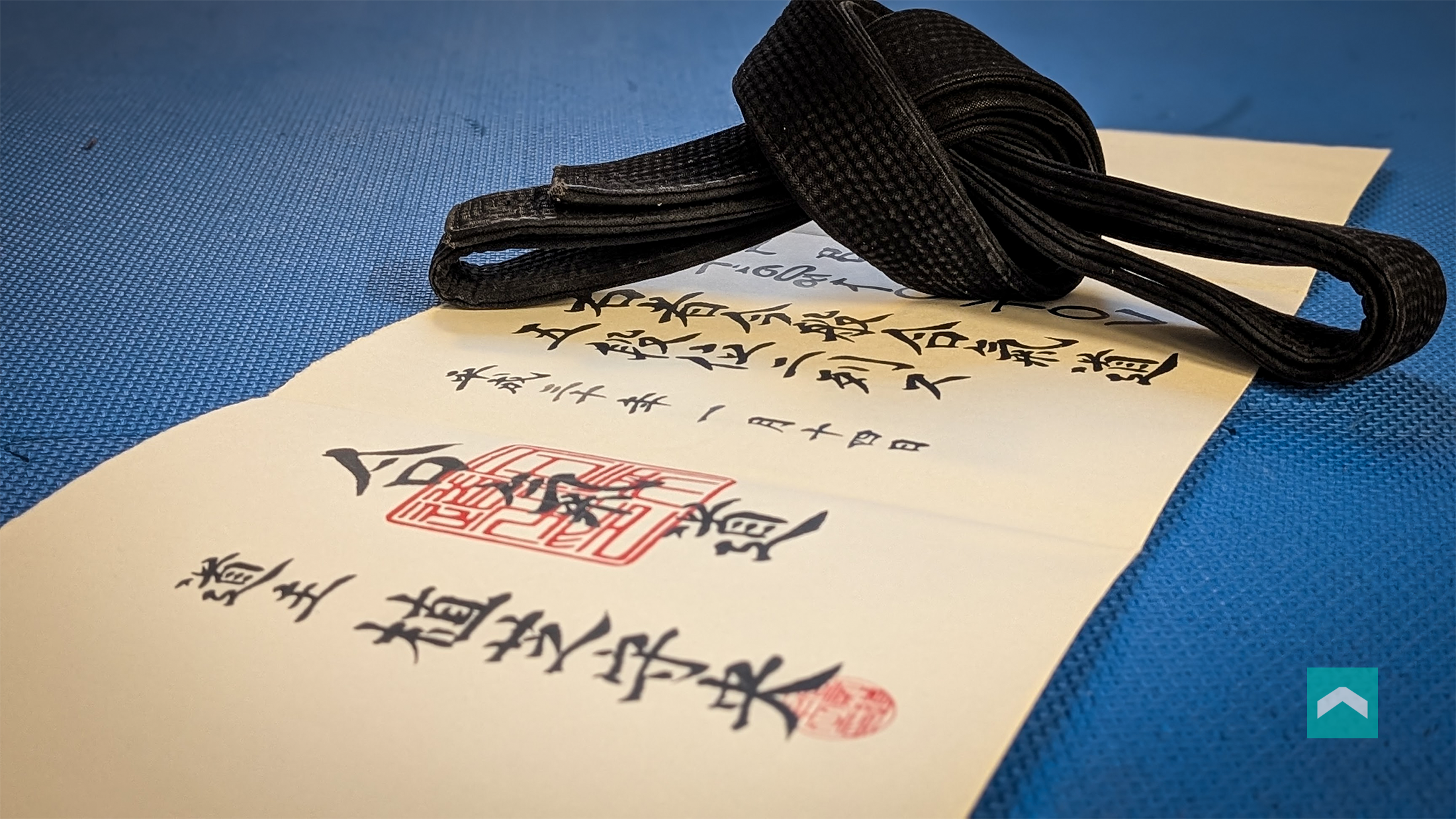
When a certificate meant something
In the 1960s and ’70s, Aikido’s global expansion followed a straightforward model. The Aikikai Hombu Dojo dispatched shihan—senior instructors—to establish organizations across the United States, Europe, and South America. These were not consultants or visiting lecturers; they were resident teachers who built national structures from the ground up, led daily training, and knew their students personally over decades.
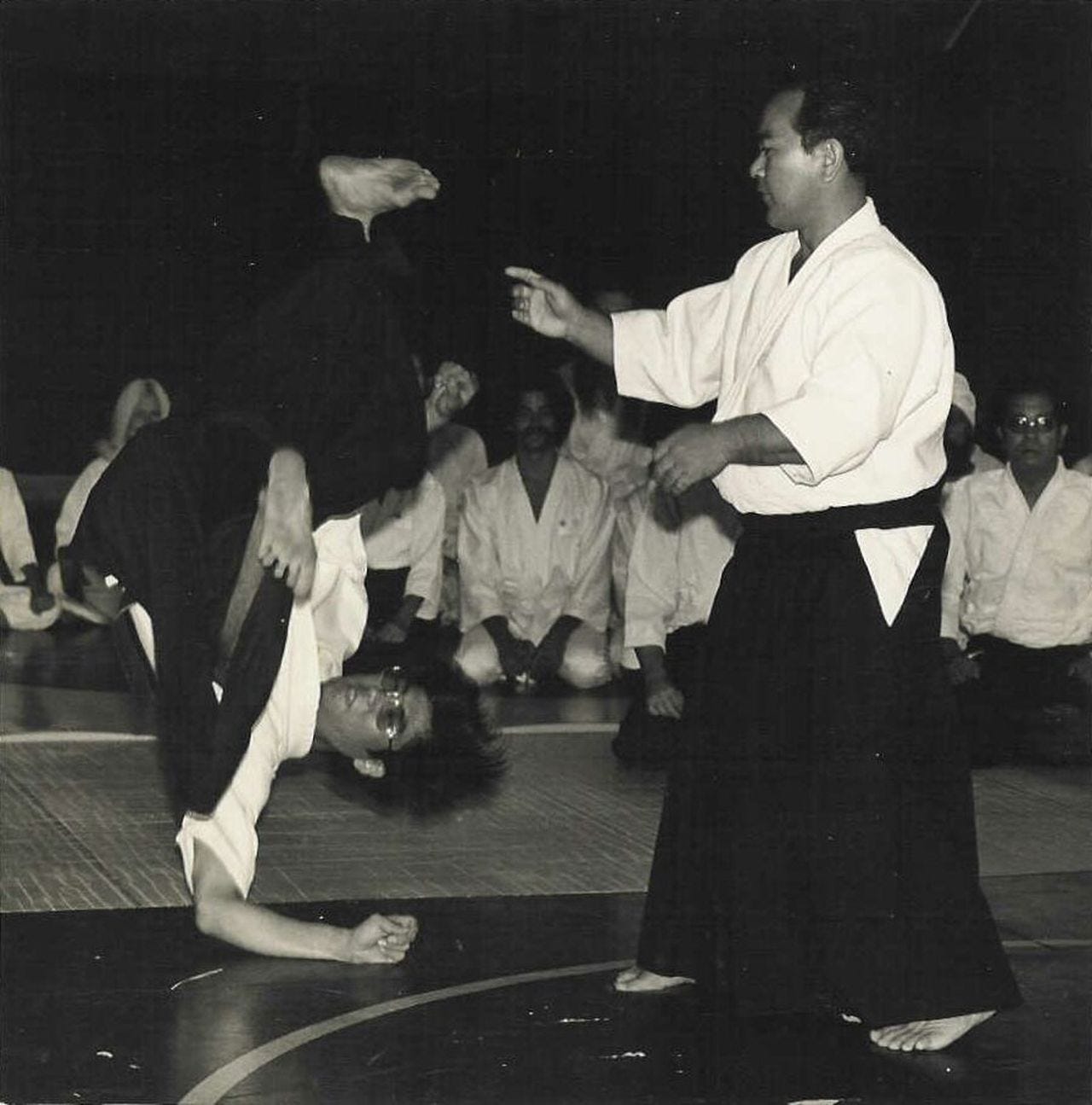

In that era, a Hombu rank certificate carried a specific weight: it was proof that a practitioner had been seen, tested, and vouched for by someone with a direct line to the art’s source. The certificate was evidence of a relationship, and the relationship was the point.
The model worked. In a single generation, Aikido spread to tens of thousands of practitioners across dozens of countries. The Aikikai became the world’s largest aikido organization, and Hombu rank became the global currency of legitimacy.
The first fractures
By the 1990s, the model began to stretch. National organizations—now large enough to harbor their own internal politics—started to splinter. Disagreements over direction, style, and authority produced institutional rifts; where one national body had once existed, suddenly there were three.
Alongside the resident shihan, a new figure emerged: the guest shihan. These were Aikikai-recognized teachers who visited affiliated groups two or three times a year to provide technical guidance and conduct gradings. Many were genuinely accomplished practitioners, but the nature of the relationship had shifted. A guest who visits twice a year cannot know a student the way a resident teacher does. Grading became something closer to an inspection than a mentorship.
This was not a failure of integrity; it was a structural shift driven by growth and fragmentation. However, the resulting certificate began to signify something different: a connection to a lineage, rather than a teacher’s direct, personal assessment of a student’s progress.
The notarial era
From the early 2000s onward, fragmentation accelerated. As national organizations continued to splinter, the Aikikai abandoned its “one-country, one-body” policy and began recognizing multiple groups. This shift fundamentally altered how rank flows.
To maintain legitimacy, each new splinter group required a relationship with an Aikikai shihan to recommend promotions. A new arrangement emerged: mid-tier instructors—both Japanese and Western—built expansive networks of affiliated groups. They visited periodically, conducted examinations, signed recommendation forms, and forwarded the paperwork—along with the required fees—to Hombu.
In many cases, the instructor conducting the exam had no prior relationship with the students. They hadn’t watched these practitioners train week-to-week, hadn’t corrected their ukemi, and knew nothing of their injuries or characters. They reviewed a single performance on a specific day, signed a form, and the certificate was processed.
The document now certified a financial transaction and an organizational affiliation. The relationship it once represented had, in many cases, quietly disappeared.
This produced a situation captured perfectly by writer Simone Chierchini: instructors who train students from white belt to dan level—who know those students better than anyone—must still send paperwork to someone on the other side of the world who has never seen them train. This is done because a stranger’s stamp is deemed more “legitimate” than the teacher’s own lifelong assessment.
It is worth sitting with that for a moment.
A structural outcome, not a conspiracy
None of this required bad actors. The organizations built what they could with the tools available. Hombu needed revenue to maintain its infrastructure as Japanese government and business support shifted over the decades. National organizations needed legitimacy to hold their communities together during splits. Guest instructors needed roles that justified their travel and sustained their income. Everyone was responding rationally to their situation.
The result, however, must be named honestly: a system originally designed to certify mastery now primarily certifies the payment of fees and membership in a specific organizational chain. For many practitioners—especially at the higher dan levels—the certificate says almost nothing about what they can actually do or teach.
There is also a quiet irony worth noting. The Doshu—the head of the Aikikai and the person whose authority underlies every certificate the organization issues—holds no dan grade himself. The Ueshiba family grants rank; it does not receive it.
Where this leaves us
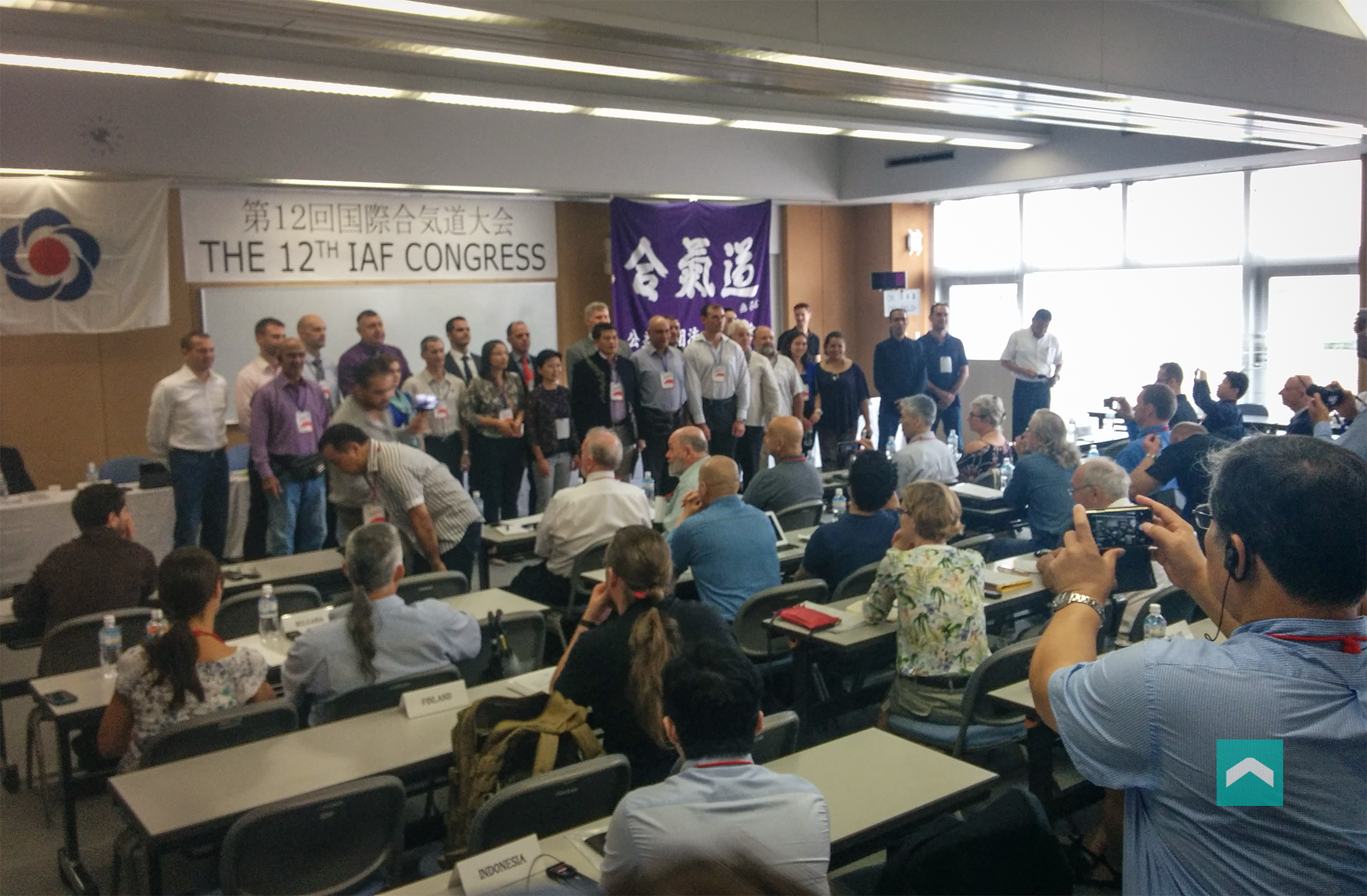
Practitioners asking what their rank actually certifies are not being cynical. These conversations happen at international seminars and IAF congresses—not in the official sessions, but in hotel lobbies late in the evening, after a few rounds, when people finally say what they think. I have sat through versions of this conversation more times than I can count. These practitioners are simply responding rationally to a system that has drifted from its original purpose.
History explains the drift without excusing it. What this drift costs us—in money, in personal development, and in the very integrity of training—is what the next parts of this series will examine.
What’s coming next
In Part 2 — the price of a dan certificate is the cost you can calculate. What you didn’t invest in instead is the one that compounds.
Further reading: Liese Klein’s Rank greed in aikido documents the financial mechanics of the US system in detail. Simone Chierchini’s The twilight of Aikikai grades covers the full historical arc.
Community question: When did you last think about what your rank certifies? Was there a moment — on the mat or off it — when the answer felt unclear?
What I value most about my rank is: wearing a black belt drastically reduced the amount of mansplaining I receive.
"The result, however, must be named honestly: a system originally designed to certify mastery now primarily certifies the payment of fees and membership in a specific organizational chain."
So what. It has surely always been the case that rank doesn't necessarliy reflect ability. There are a lot of talented, skillful, and interesting 3rd dans in the world, and a lot of out of shape and stagnant 6th dans too. You take the good where you can find it, and don't bother with the rest.
Dan rank fees are how we support the Aikikai Foundation -- consider it tithing to support your church. I have no problem with this. You get a nicely printed certificate to frame, and a souvenir passport book. Cool. It's a connection to a worldwide community of (usually) great people, which in today's world is increasingly rare and sorely needed.