


TL;DR: The price of a dan certificate is the cost you can calculate. What you didn’t invest in instead is the one that compounds.
In Part 1 we traced how aikido rank went from a meaningful signal of a real teacher-student relationship to a notarial stamp on a financial transaction. Here we look at what that transaction actually costs.
There is a price you can see and a price you can’t.
The visible price is on the fee schedule. As Liese Klein documented in her investigative piece, Rank greed in aikido, a shodan by examination through the Aikikai Foundation costs approximately $148 at current rates—covering membership, processing, and the international yudansha book. That is the base. Above yondan, fees are no longer fixed; they are negotiated, and the organizations sitting between the practitioner and Hombu set their own terms.
In the United States, an organization might charge its members $250 for a 1st dan, retaining the difference to fund its own operations. Liese Klein’s analysis of the USAF’s public tax filings revealed a surplus of over $83,000 on rank revenue in 2023—the gap between what members paid for certificates and what was remitted to Japan.
European federations tend to operate differently. I spent 15 years running a national federation in Slovenia, where we passed Hombu’s rates through without a surcharge, absorbing the administrative work into general membership. In our system, nobody was profiting from rank.
But the visible price was never really the point.
The price behind the price
The situation in France illustrates the scale. Its two main federations, the FFAAA and FFAB, held a combined 40,500 licensees as of 2024—a significant drop from their 1990s peak of roughly 60,000. These numbers have been contracting for two decades, a decline only accelerated by the pandemic. In my own federation, only about a quarter of practitioners remained active post-corona. While some Western European organizations have since recovered, the broader trend has not reversed.
Institutions under revenue pressure tend to do what any struggling franchise does: they expand. They seek more affiliated groups, more authorized examiners, and more certificates flowing through the system. The shihan title—once rare enough to imply a specific, singular mastery—has become more widely distributed. Recently, I’ve noticed shihan titles appearing among relatively young Eastern European instructors, a phenomenon I hadn’t seen before.
I am not questioning the individuals involved. I am questioning the function. When the shihan title operates primarily as a license to conduct dan examinations—and that license is issued more broadly to sustain volume—the standard behind the examination becomes a variable.
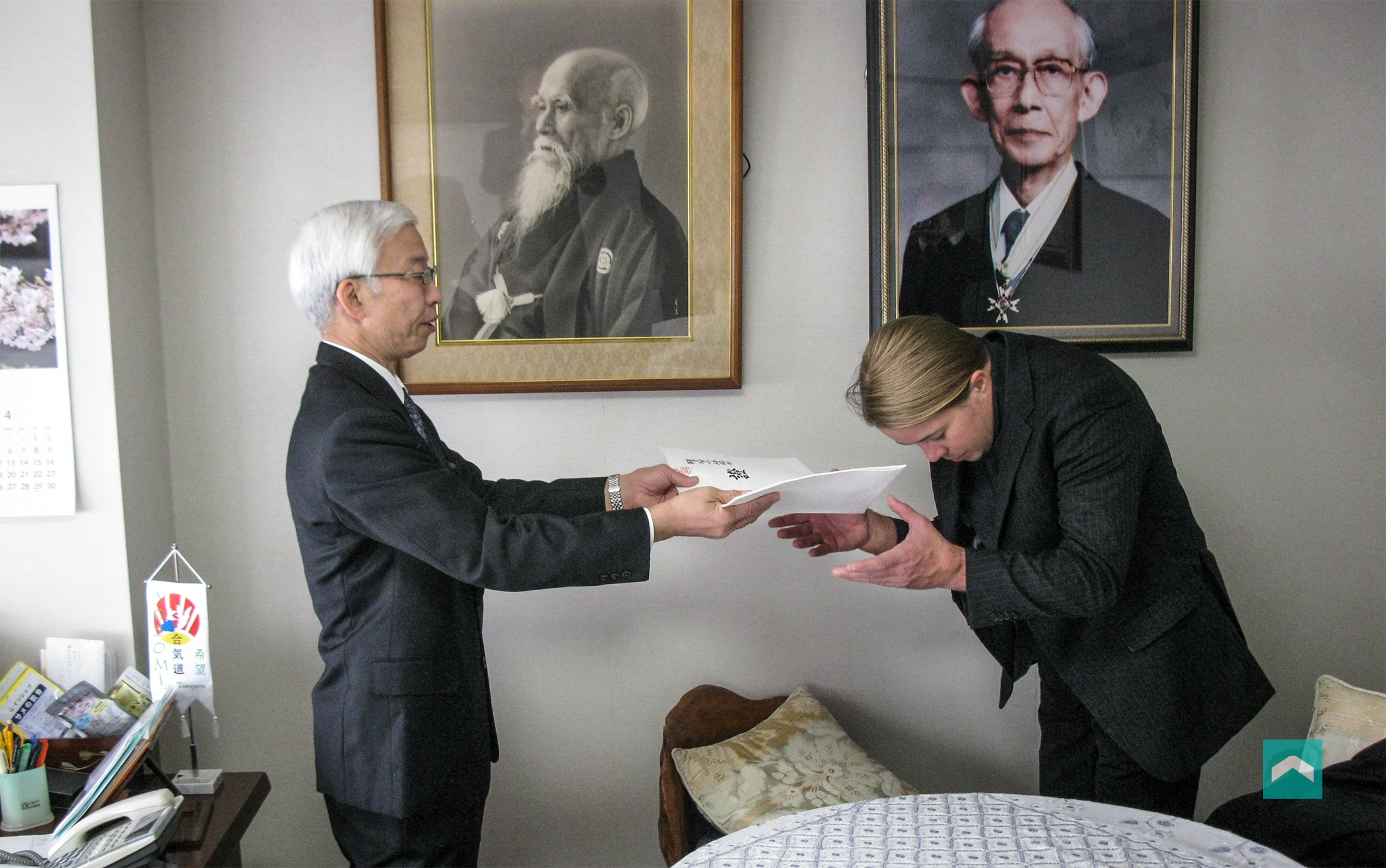
Here is the actual price behind the price. When you paid for your dan certificate, you weren’t just buying a piece of paper; you were paying for association with a standard. You were paying for a signal that your training had been assessed through a meaningful line of transmission. That standard is the real asset. The certificate economy, in its effort to sustain itself against declining numbers, is quietly spending that asset down. Every time the franchise expands to compensate for revenue loss, the credential already on your wall loses value. Not because your training was wrong, but because the brand you paid to join is over-leveraged.
Through the wrong doors
I traveled to Japan five times for Aikido. My first trip was to plant the seeds for our federation’s official recognition. At the time, I wasn’t asking questions about money or standards. I was doing what you do when you trust the system and the people within it: following the logic, playing the role, and going where I was told it mattered to go.
What I found at Hombu was not what the art’s reputation had led me to expect. There was a significant gap between the prestige printed on the certificates and the reality behind the doors—not in the training itself, but in the institution surrounding it. It felt like an organization governed from a different century. Yet, I had enough reverence then to adjust my interpretation rather than my conclusion. That is what you do inside an institution: you force the experience to fit the story you were given.
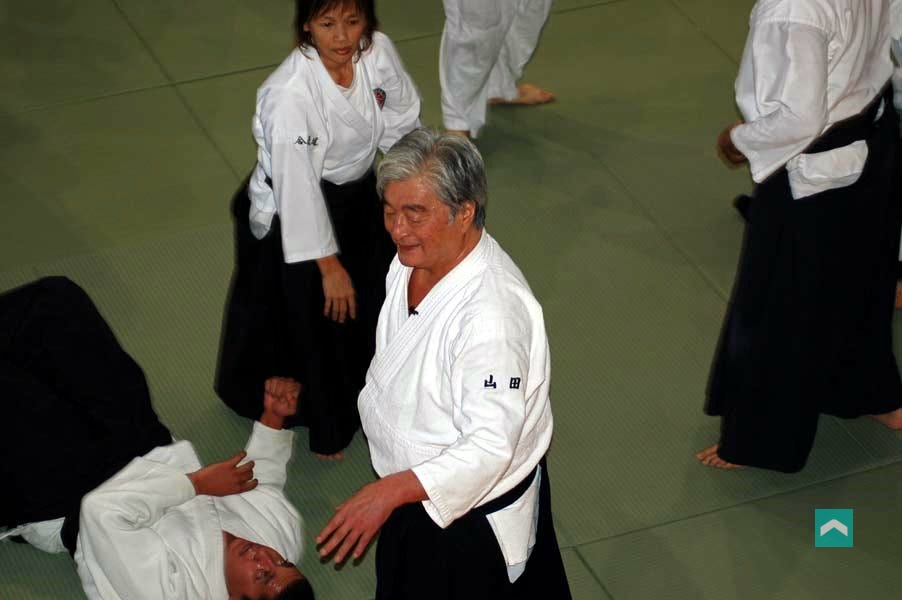
The international congresses offered a different perspective. At one IAF congress, I sat with Yamada Shihan and a group of global leaders. Within minutes, he was openly criticizing Aikikai grading politics and greed. I was floored—not just by the critique, but that someone of his stature would speak so bluntly, in a group, without hesitation. At that stage, such candor was unthinkable to me.
I stayed within that institutional logic for longer than I care to admit. When I finally stepped out, I could see the full ledger: not just the fees, but the years, the energy, and the self-deception required to stay useful to the machine.
That is a cost that appears on no fee schedule. It makes it worth asking what else is missing from the books.
Where the money didn’t go
Here is the number that clarifies the scale. A godan (5th dan) certificate costs approximately €500. A nanadan (7th dan) can range toward €2,000—fees above yondan are not fixed by Hombu and vary by organization. Add to this the pilgrimage to Japan to receive the rank at the Kagamibiraki ceremony: another €1,500 to €2,000 in flights, lodging, and the ceremonial expenses of the occasion.
Yet, most of these practitioners have never spent €200 on a pedagogy course.
This isn’t because they don’t care about teaching; it’s because the system never framed teaching as a necessary investment. The “dan economy” rewards rank acquisition, but it says nothing about one’s ability to transfer knowledge. Rob Liberti puts the underlying issue plainly: skill is personal, but teaching is reproducible. A system that measures the former while ignoring the latter produces a specific kind of practitioner—technically experienced and institutionally validated, yet often quietly puzzled by why their students aren’t growing as people. They may execute techniques more cleanly, but they aren’t necessarily changing how they handle conflict, pressure, or a difficult conversation off the mat.
That same budget, spent differently, could bring in a guest teacher from outside the Aikido bubble: a kinesiologist, a movement educator, a psychologist specializing in performance, or a somatic coach. It could fund a junior instructor’s first year of seminar travel, cover a new dojo’s equipment costs, or subsidize a talented practitioner who would otherwise drop out due to fees. These are not idealistic alternatives; they are what professionals in almost every other field do routinely as a basic condition of staying current.
What’s your next aikido investment?
The art grows where attention and resources are directed. For decades, a significant portion of both has flowed toward paper.
Writer Simone Chierchini once observed that there are no rokudan violinists. There are only violinists who are a pleasure to listen to and those who are unbearable. No musician ever improved by paying for a certificate; they improved by playing—by investing their resources into the craft itself rather than the credential meant to represent it.
This isn’t a question of whether the Aikikai or the ranking system should exist. The question is far more personal: the next time you have resources to invest in your development, where will they go?
Every choice you make as a practitioner is a vote for the future of the art.
What’s coming next
In Part 3 — the deepest cost of aiki-consumerism isn’t financial. It’s the practitioner who collected certificates while something more essential didn’t get built — and finds that out not on the mat, but in ordinary life.
Community question: What’s the most useful thing you’ve spent money on in your aikido development — and was it a certificate?