


TL;DR: Exam anxiety is widespread in aikido because pressure exposes the moments where center slips. It is information, not failure. Useful strategies include slowing down, adding physical resets, using mock exams, and treating mistakes as part of development. The lingering question is why early tests measure real skill while higher promotions drift toward politics.
For years, I was convinced I had failed every single aikido exam. My stomach would tie itself in knots days before testing. I slept poorly, and during the exam I was a sweaty mess with my heart pounding so loudly I could barely think. Techniques that flowed naturally in practice would suddenly disconnect from my body.
After each exam, the impostor syndrome hit hard. I told myself I didn’t deserve the rank, that the examiners were being generous, that I had simply been lucky. The feeling sometimes stayed with me for months.
Then, at some point later, while training or just moving through daily life, I’d catch myself realizing: I’m there now. I actually deserve this rank. The gap between who I was on exam day and who I had become had quietly closed.
And it turned out I wasn’t alone.
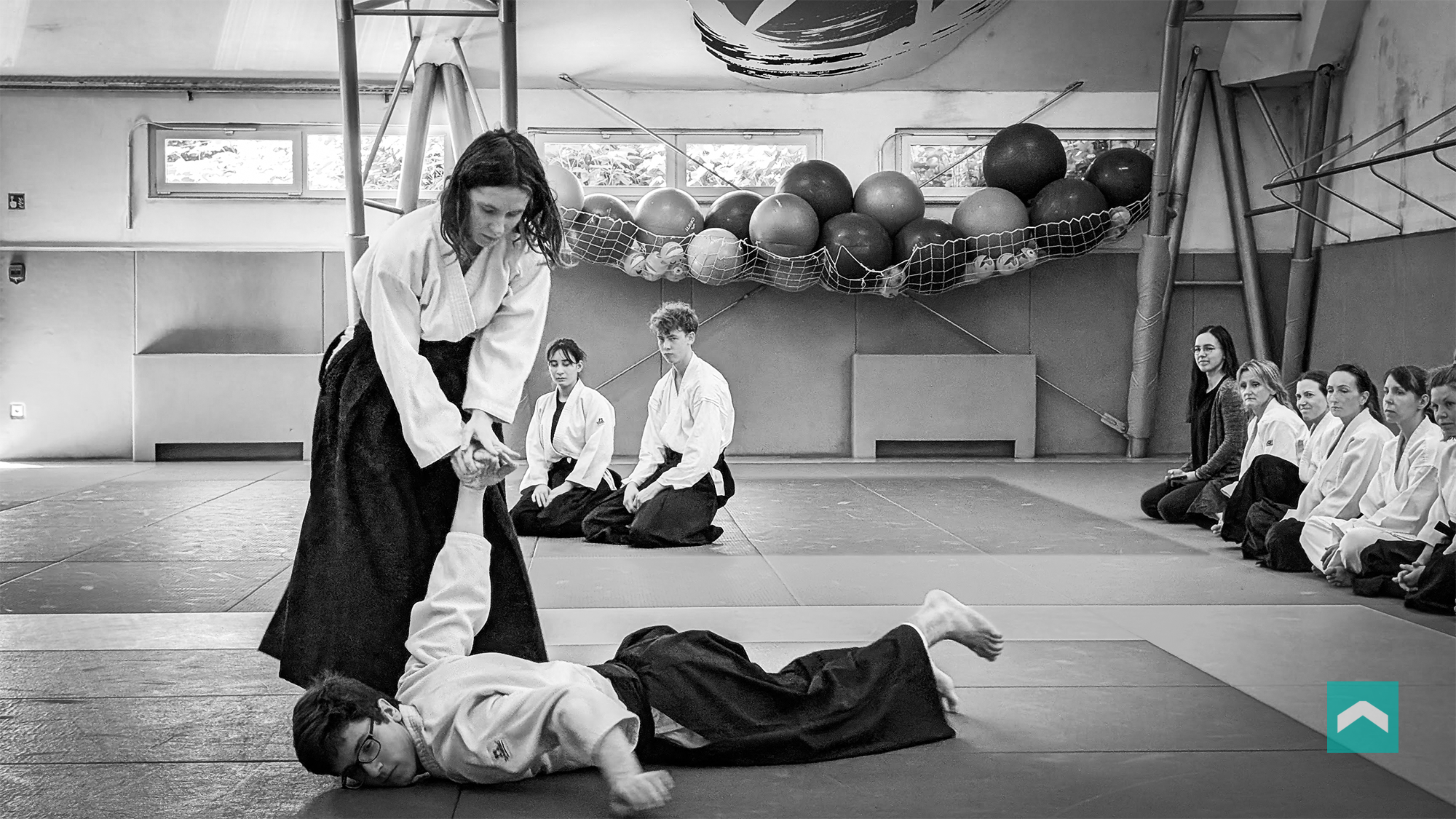
The anxiety is nearly universal
A recent Reddit discussion revealed what most aikido practitioners won’t say openly. Exam anxiety is everywhere. One person described feeling physically ill before tests. Another wrote about forgetting the link between technique names and movement despite perfect execution in normal training. A third admitted to obsessively predicting every possible mistake.
The responses were striking. The volume of “me too” replies made it clear this is not a personal flaw. It reflects the way testing is set up.
The most useful comment came from someone who wrote: “If you are thinking about what the others might think, you are not in your center.”
That single line reframes the whole experience. Anxiety shows the exact moment attention slips away from center. The exam simply makes it visible.
What the exam measures
After twenty-five years of close observations, one thing stands out clearly: the exam measures the ability to stay centered under pressure. The technique itself is secondary. It functions as a lens that shows what happens to attention when stakes rise.
This explains a common pattern. Practitioners who move well in regular training sometimes fall apart during exams. Attention shifts toward judgment, fear of mistakes, or concern about appearance. Movement breaks down because focus leaves the body and collapses into self-monitoring.
From this perspective, exam performance is not about knowledge gaps. It reflects how reliably someone can maintain or regain presence when pressure interferes. The exam does not create this condition. It exposes it.
What follows, then, is not a question of calming nerves, but of training attention so it has somewhere stable to return when pressure pulls it away.
Strategies that work under pressure
The community shared tactics that go beyond “just relax” platitudes:
Deliberate slowness. You’re not penalized for taking your time. Rushing comes from anxiety. Slowing down interrupts that cycle and gives your body a chance to remember what it knows.
Physical interrupts. One practitioner described hopping, stomping feet, or pressing palms together before testing. These movements break rumination cycles by giving the nervous system something concrete to do instead of spinning stories about failure.
Mock exams under real conditions. Several people mentioned this as transformative. The first mock exam reveals what anxiety actually does to your performance. The second one is slightly easier. By the third or fourth, your body learns that this pressure won’t kill you.
Reframing failure as necessary. A practitioner who failed their shodan exam in front of many people later realized: “The possibility of failure is what makes it worth doing because passing means you have genuinely attained the necessary skill level.” Without the risk, passing means nothing.
Trusting preparation like musicians trust rehearsal. One person compared exam performance to musical performance: trust your preparation, move more slowly than you want, and don’t fixate on any single thing because that distracts from the whole.
The deeper paradox
What stood out in the Reddit discussion was not the anxiety itself but the number of people questioning the purpose of the belt system.
“I’d rather go back to the old system of teachers just recognizing progress,” wrote one practitioner. “The densho system worked fine. Belts and promotions are good for motivating kids, which is why Kano sensei invented them.”
Another noted they don’t attach meaning to belt tests: “It’s nice to have a milestone but I’m not better the day after one than the day before.”
This points to something we rarely discuss: the belt system creates artificial pressure that may not serve adult learning. We imported a children’s motivation tool and applied it to a practice meant to develop presence under real-world pressure. The result is people getting physically ill over what should be a confirmation of growth they’ve already demonstrated in daily practice.
What changed for me
After my 4th dan exam, I felt genuine relief. Technical exam stress was finally behind me. But that relief quickly revealed something else. When advancement no longer depends on demonstrating competence under observation, the criteria inevitably shift. Institutional relationships and organizational loyalty begin to matter more. Knowledge and teaching ability still count, of course, but they are much harder to evaluate than simple participation and commitment.
That’s where the irony appears in this quote: “the more you pay for a diploma, the less value it has.” We push ourselves through kyu and early dan exams that demand real ability, real pressure, real evidence of growth, then quietly loosen those standards precisely at the stage where clarity would matter most.
The anxiety many of us feel before exams functions as a signal. It tells us what we value, what we fear losing, and how we instinctively measure genuine progress. The more useful question is whether we are testing the right things, at the right moments, in the right ways.
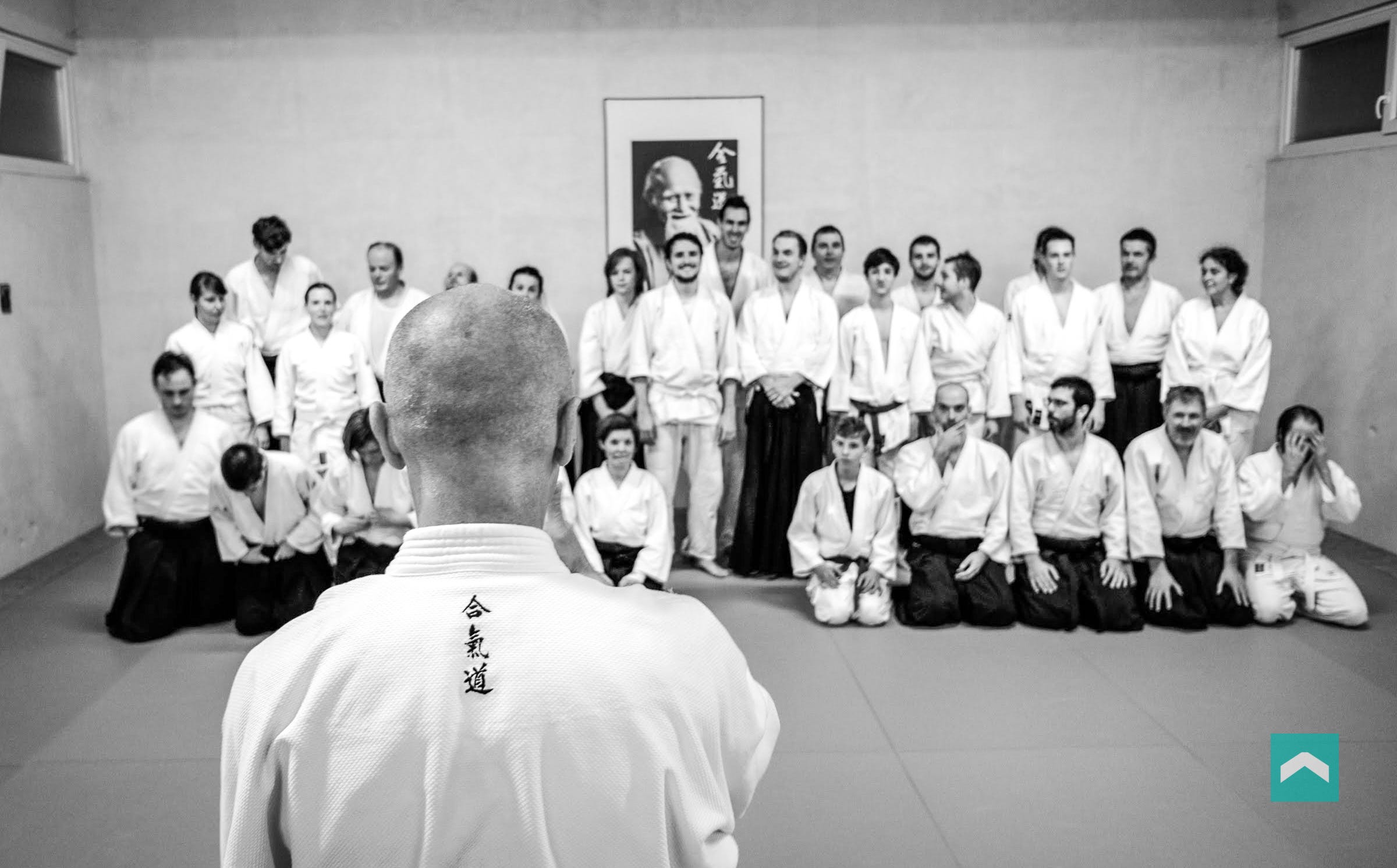
The valuable insight
When you’re preoccupied with how others see you, you’re not centered. In that sense, exam anxiety is information. Pressure exposes the places where attention leaks, where balance slips, where connection to yourself thins out. That is exactly what aikido is meant to uncover.
So the real question isn’t how to get rid of anxiety. It’s what that anxiety is pointing to. What skill is still developing? What habit breaks under pressure? And once you can see it clearly, how do you practice returning to center not only in formal testing, but in the many ordinary moments where the stakes feel personal?
Because that’s the actual exam. The one on the mat simply makes it visible.
In the next part: How I accidentally discovered what sport psychology has known for decades and why my students stopped being nervous about exams.
I think my Aikido kyu exams were the hardest exams I ever took in terms of anxiety. But they also prepared me so well for real world presentations. I've had to give countless talks over the years and I always have some butterflies in my stomach about them, but they are so tame compared to the self imposed stress of an Aikido test. Very happy to be done with testing now. In our dojo we are tested up through 4th dan, after that we give demos instead of having to respond to random technique requests from the testing board. For my yon dan test I actually trained myself by staying calm while taking cold showers to help my body stay calm during the adrenaline rush of the test. It was the most calm and controlled test I've taken. The test was far from perfect, I made mistakes, but part of my training is letting go of having to be perfect. In my mid 60s now and I'm just happy to be able to still physically train!