


TL;DR: Exam stress spikes when evaluation is rare, compressed, and unfamiliar. Sport psychology and medical education describe the same pattern: moderate pressure helps, excessive or novel pressure breaks coordination. The fix is practical: frequent exposure, fast feedback, and safe failure. Aikido rarely builds these conditions into official preparation, so teachers and students have to.
In Parts 1 and 2, we looked at exam anxiety from the inside out. First, from the practitioner’s side, what pressure reveals about attention and loss of center. Then from the teaching side, how extending preparation time changed outcomes in a very concrete way. This third part steps back to name the pattern more clearly and place it in a wider context. If you want the full arc, it makes sense to start at the beginning.
By now the pattern should be familiar: students train well for most of the year, then struggle when the exam arrives. Techniques fragment. Names disappear. Bodies stiffen. Outside the exam setting, the same people move without issue.
The usual explanations follow: Nerves. Personality. Confidence. None of them explain why stress spikes so sharply at one specific moment and then fades without intervention.
Exam stress follows a logic. It appears when pressure is concentrated into a short window, when evaluation feels unfamiliar, and when mistakes carry disproportionate weight. Change any one of those factors, and the intensity drops.
This is not unique to Aikido. It shows up wherever people are evaluated under observation.
What sport psychology calls it
In sport psychology, this relationship is often described through the inverted-U principle. As arousal increases, performance improves up to a point. Beyond that point, additional pressure interferes with coordination, timing, and decision-making.
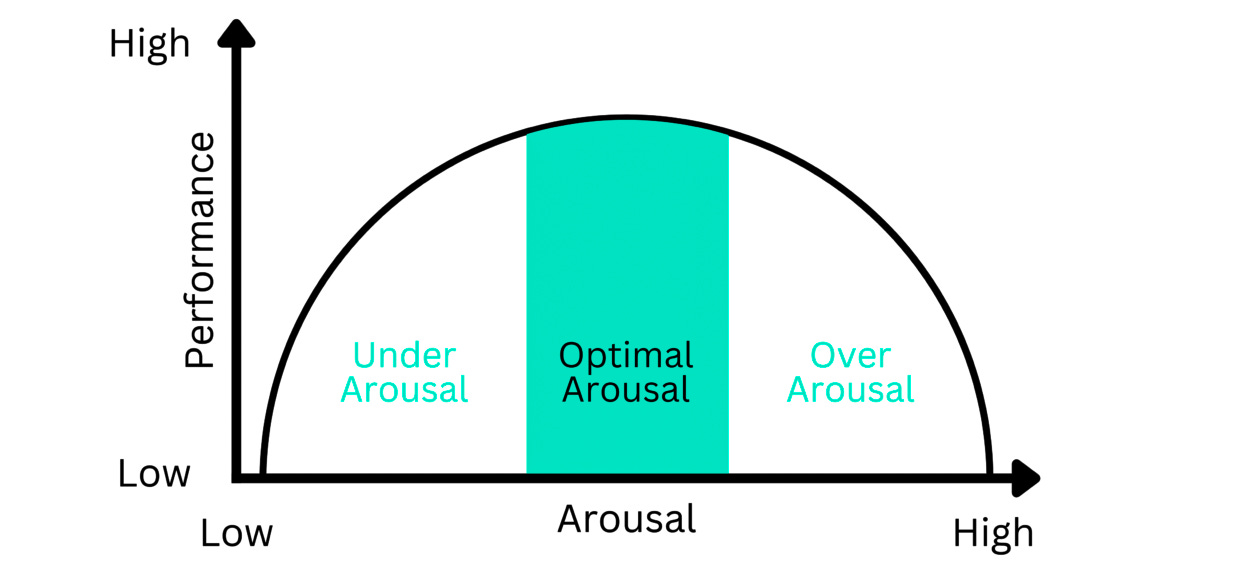
The principle is not about eliminating stress; it explains why some pressure helps and why excessive or unfamiliar pressure disrupts performance.
Athletes perform best when arousal levels are familiar and manageable. When pressure rises suddenly or carries high consequence without prior exposure, fine motor control and situational awareness degrade. The nervous system shifts priorities.
Exams create a steep version of this curve when preparation is compressed. Pressure rises quickly, familiarity is low, and the cost of error feels absolute. The response is predictable.
How medical education validates It
Medical education faces a similar challenge. Students are expected to perform complex tasks under observation, often with real consequences. The response has not been to demand calmness, but to redesign exposure.
Clinical simulations, repeated assessments, and supervised practice normalize evaluation. Students are assessed early and often, while the cost of error remains low. Feedback is immediate. Over time, assessment stops feeling exceptional and becomes part of the learning environment.
The effect is not the removal of stress; it is proportional stress. Students still feel pressure, but it no longer overwhelms performance.
This mirrors what happens in the dojo when preparation is extended. When evaluation conditions become familiar, stress loses its edge.
The three mechanisms that work
Across disciplines, three mechanisms consistently reduce harmful exam stress.
Repeated exposure under mild pressure Evaluation stops being threatening when it is no longer rare. Short, frequent mock situations teach the nervous system what to expect. Pressure becomes familiar rather than alarming.
Fast feedback loops Corrections that arrive immediately allow adjustment without rumination. Delayed feedback amplifies anxiety and self-criticism. Immediate feedback keeps attention on the task.
Safe failure When mistakes carry no lasting cost, learning accelerates. Students can explore limits instead of protecting themselves. Confidence grows from evidence, not reassurance.
These mechanisms are simple. They do not require special tools or advanced theory. They require time, consistency, and intention.
What this means for aikido practice
Here is the uncomfortable part. Most Aikido structures simply do not have this covered. Exam logistics exist, criteria exist, and ranks exist. The learning environment that would make exams engaging yet proportionate is often missing.
Even federations that invest in regular dan preparation programs, modern performance training principles remain largely unexplored. Exposure design stays intuitive rather than deliberate. Pedagogy naturally centers on repetition—the method that produced current instructors. The teaching patterns work, they’ve simply remained consistent across generations, now delivered by higher ranks with better scheduling.
This is odd, because the problem is not obscure. The mechanisms are basic. Other performance fields have treated them as standard for decades. In Aikido, we still act surprised when students fall apart after a month of cramming.
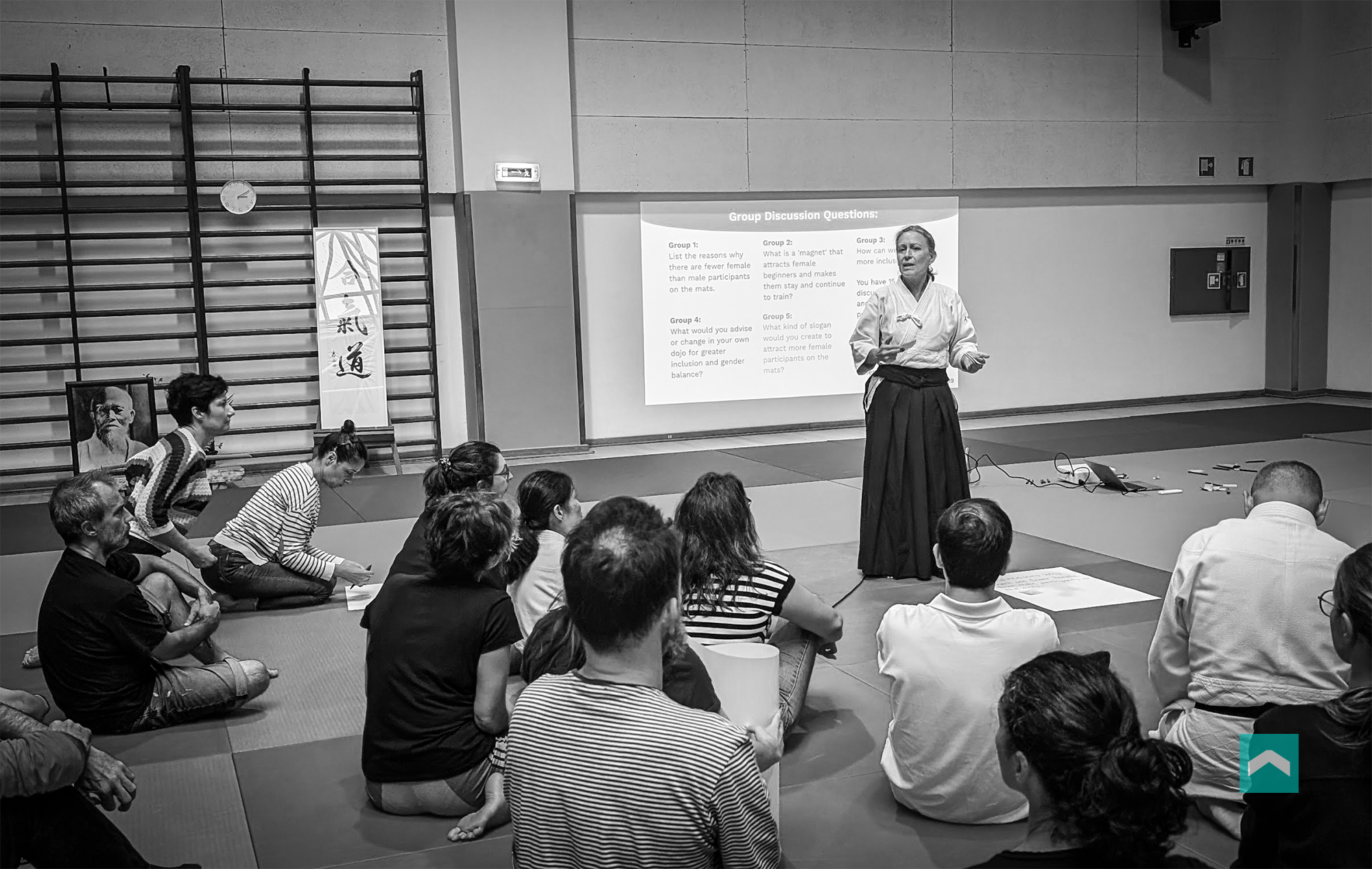
That leaves responsibility with the people on the mat. Teachers need to practice teaching with the same care they apply to technique. Students need to participate actively in their own preparation. Both need to talk openly about what helps and what does not.
This is the mission of Aikicraft: to open the conversation about examining modern methods that help and improve knowledge transmission, comparing experience, borrowing from other disciplines, and treating teaching as a skill that can be trained.
Exam stress will not disappear. But it can become informative rather than disruptive. That shift begins when exams stop being isolated events and start being treated as part of practice.